Summer on the Highveld brings long light mornings, warm days, strong sun and some of the most dramatic thunderstorms in the country. It is a great season for running, as long as you plan around the heat and the lightning. Here is how to stay safe and keep training through a Gauteng summer, and why Bedfordview Athletics heads out at 05h00.
In short:
- The Highveld is one of South Africa's most lightning-prone regions. If you hear thunder, get indoors and wait 30 minutes after the last rumble.
- Run early in the morning, before the heat builds and before afternoon storms develop.
- UV is stronger at altitude, about 10% higher for every 1,000 m, so protect your skin even when it feels cool.
- Drink to thirst. Forcing down large amounts of water can be as dangerous as not drinking.
Lightning: the Highveld's biggest summer risk
South African lightning research shows that the Highveld and the eastern escarpment record on average between 10 and 15 lightning flashes per square kilometre per year, among the highest rates in the country. A study of lightning deaths on the Highveld describes some 40 to 70 thunderstorm days a year in the region. Highveld storms often build quickly in the afternoon and evening, sometimes from a clear morning sky.
The rules are simple, and worth following without exception:
- When thunder roars, go indoors. If you can hear thunder, you are close enough to be struck. Lightning can strike well away from the rain.
- Get to real shelter. A substantial building, or a hard-topped car with the windows closed. Bus shelters, sheds, gazebos and trees are not safe.
- Wait 30 minutes after the last thunder before you carry on. Storms can still strike as they move away.
- If you are caught in the open, keep moving towards shelter, away from hilltops, open fields, isolated trees, fences and water.
- If someone is struck, they do not carry an electrical charge, so it is safe to help. Call 112 from a mobile phone or 10177 for an ambulance, and start CPR if they are not breathing.
Check the forecast and South African Weather Service warnings before afternoon or evening runs, and have a plan for where you would shelter on your route.
Beating the heat
Highveld summer days are usually warm rather than scorching, but the sun is intense, and an afternoon run on hot tar can be tough. A few habits make a big difference:
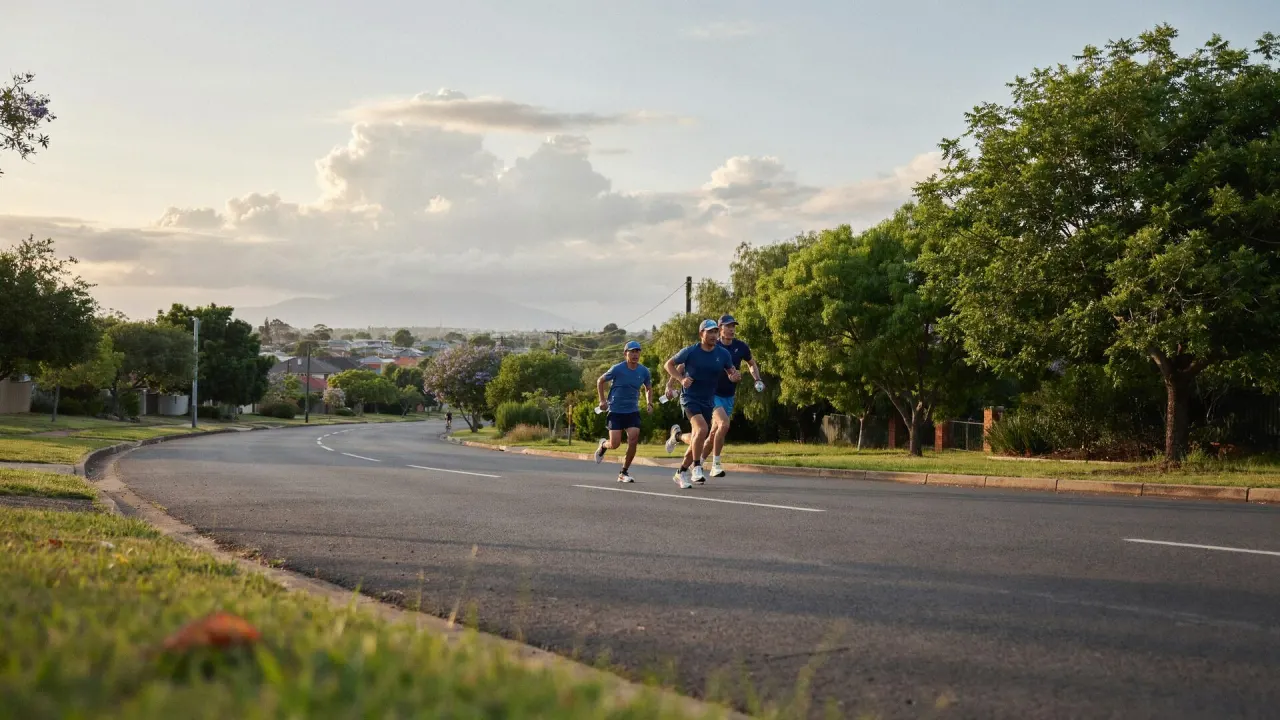
- Run early. First light is the coolest and calmest part of the day, and you finish before most storms build.
- Slow down on hot days. Run by effort, not pace. Your body needs to send blood to your skin to cool you, so the same pace costs more.
- Dress for the sun. Light, breathable clothing, a cap or visor and sunglasses.
- Use sunscreen. The World Health Organization notes that UV levels increase by about 10% with every 1,000 m of altitude, and Bedfordview sits at about 1,640 m.
- Know the warning signs of heat illness: dizziness, confusion, headache, nausea, chills or goosebumps in the heat, or feeling unusually weak. Stop, get into the shade, cool down and get help if you do not recover quickly.
How much should you drink?
The international consensus on exercise-associated hyponatraemia, a dangerous drop in blood sodium caused by drinking too much, is clear: drink according to thirst. Fixed drinking targets do not suit everyone, because sweat rates vary so much between people and conditions. Modest dehydration is well tolerated by healthy runners, while overdrinking during long events can be life-threatening.
- Start your run well hydrated, without forcing extra water.
- On runs over about an hour, carry water or plan a route past a water point, and drink when you are thirsty.
- On long, hot runs, a sports drink or salty snack can help replace what you sweat out.
- Weighing yourself before and after a long run is a simple way to learn how much you sweat. Gaining weight on a run means you drank too much.
Safety on early morning runs
Running at 05h00 avoids the heat and the storms, but it brings its own considerations. Wear something bright or reflective, carry a light, and run against the traffic where there is no pavement. Above all, run with others. There is real safety in numbers at that hour, and it is a lot more fun.
Summer running with Bedfordview Athletics
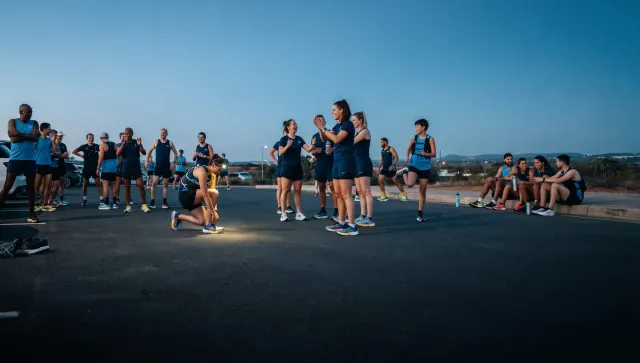
Our weekday runs start at 05h00 on Tuesday to Friday, with long runs on Saturday and Sunday at 06h00, all from the top parking lot at Virgin Active Bedfordview. That timing gets us home before the heat and well before the afternoon storms. See the training runs for details, and our running routes for the roads we use.
New to running? Our free Sofa to So Far programme runs through the summer, and our article on the health benefits of running explains why it is worth starting.
Questions runners ask
Is it safe to run when I can hear thunder?
No. If you can hear thunder, lightning is close enough to strike you. Get indoors or into a hard-topped car and wait 30 minutes after the last thunder.
What is the best time to run in a Johannesburg summer?
Early morning. It is cooler, the UV is lower, and Highveld thunderstorms usually develop in the afternoon and evening.
How much water should I drink on a run?
Drink when you are thirsty. On runs under an hour most people need little or nothing. On longer runs, carry water and drink to thirst rather than to a fixed amount.
Sources
- The lightning climatology of South Africa. South African Journal of Science, 2012.
- National Weather Service. Lightning safety and outdoor sports activities.
- Hew-Butler T, et al. Exercise-associated hyponatremia: 2017 update. Frontiers in Medicine, 2017.
- World Health Organization. Radiation: ultraviolet (UV) radiation.
This article is general information, not medical advice.